Image 1 of 6
Background
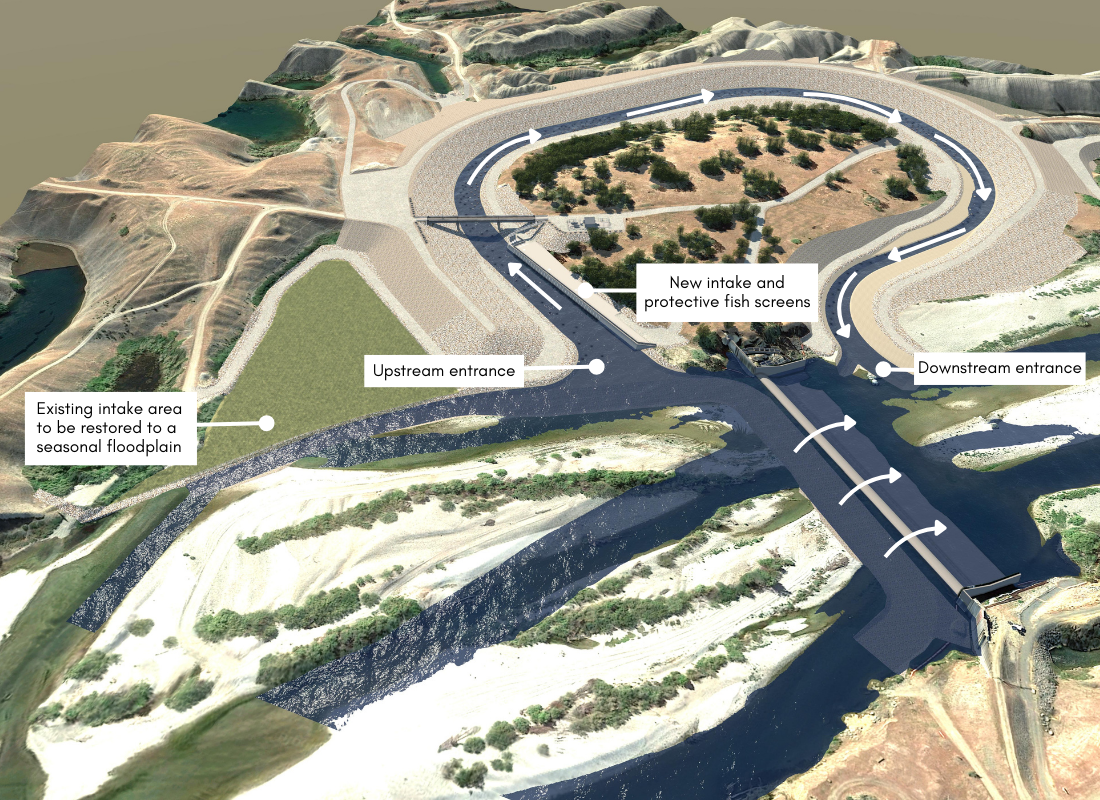
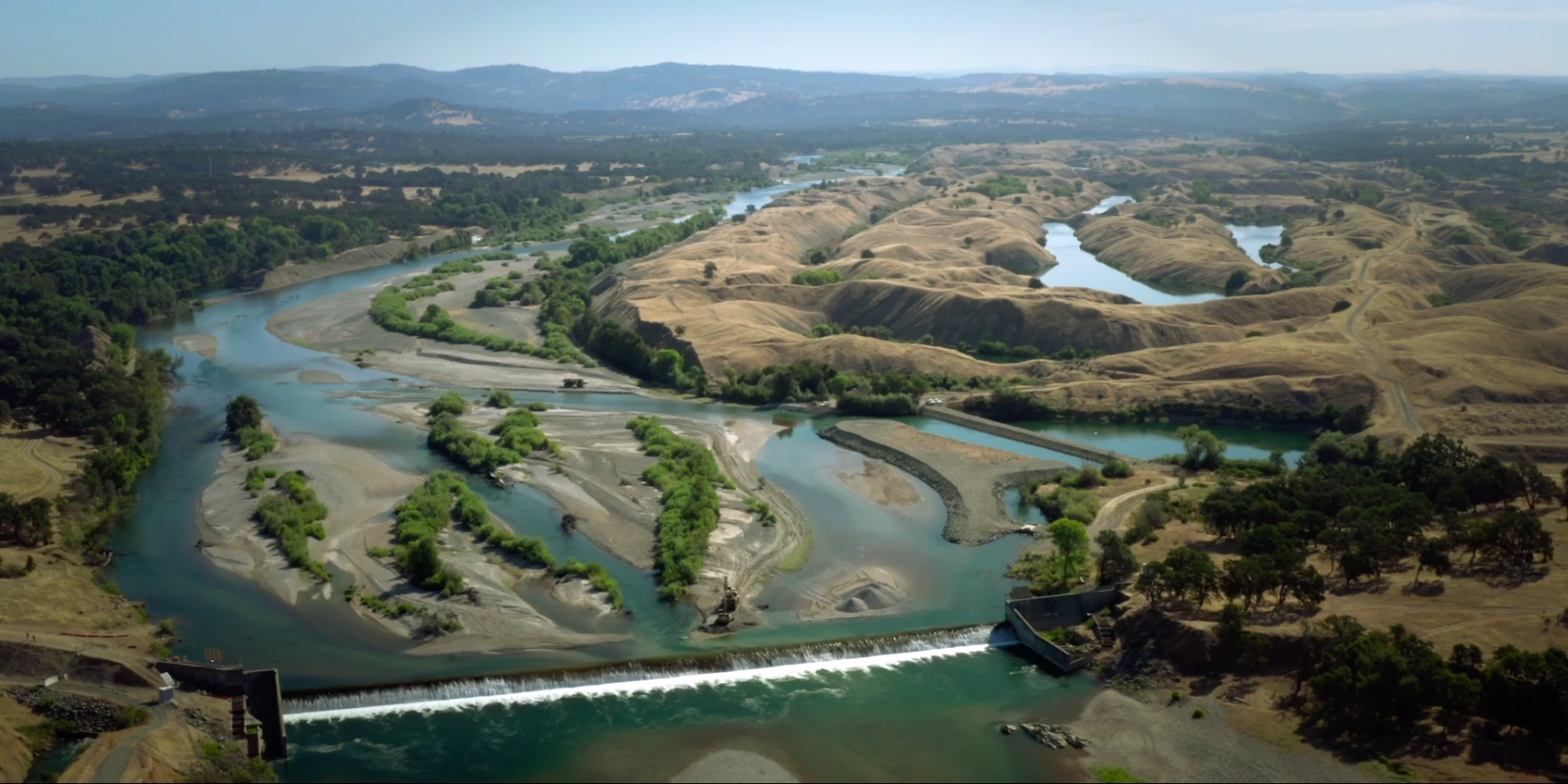
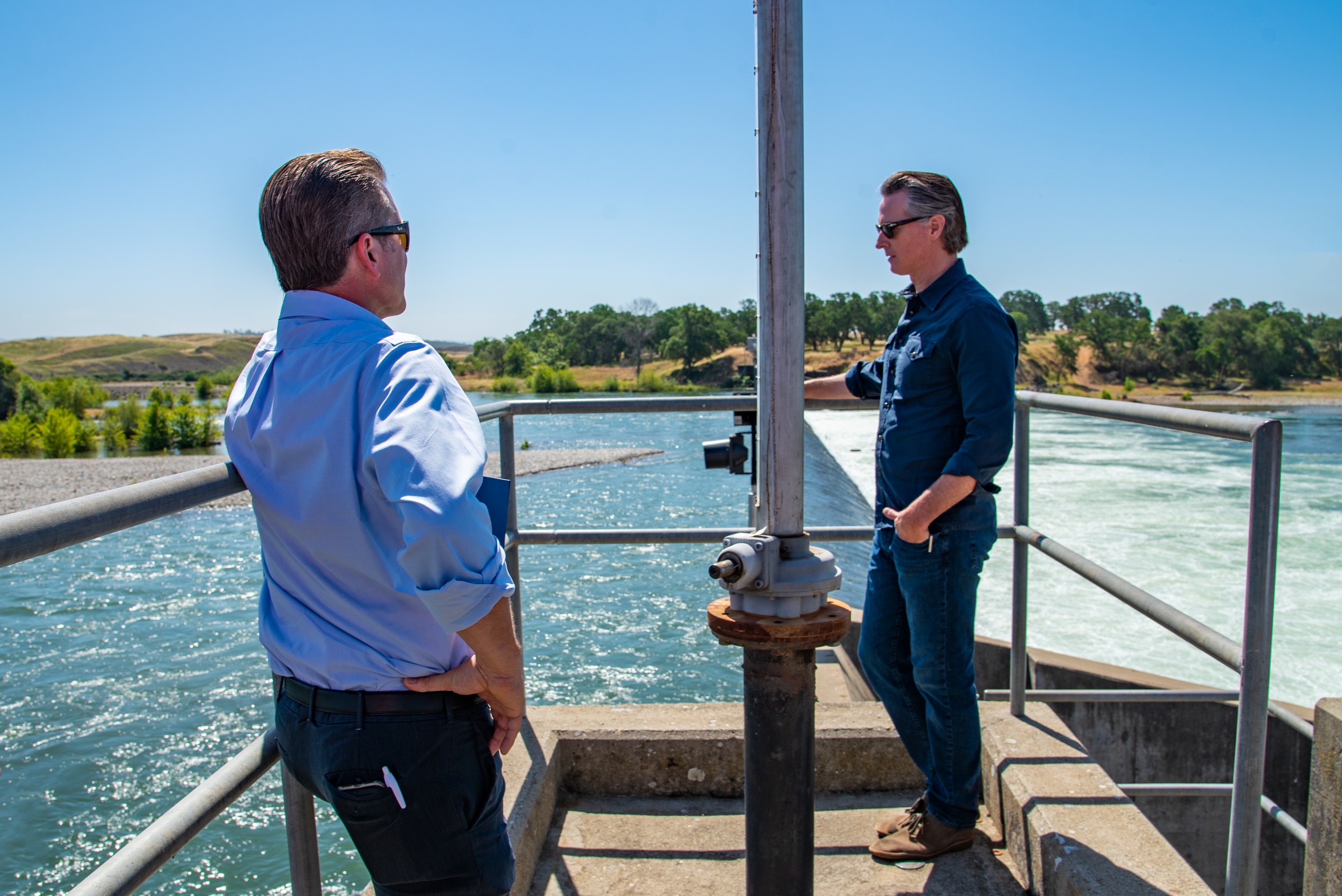
The Nature-like Fishway is a channel resembling a natural river designed so that salmon, steelhead, sturgeon and lamprey can easily get around the U.S. Army Corps of Engineers’ Daguerre Point Dam to reach more than 10 miles of healthy, cool-water spawning habitat in the lower Yuba River.
The fishway will significantly improve passage across a wide range of flow conditions for these fish species and support safe passage for multiple life stages, including non-jumping species that cannot use traditional fish ladders. It was designed to benefit state and federally listed species, including spring-run Chinook salmon, Central Valley steelhead and green sturgeon, as well as other native fish such as Pacific lamprey.
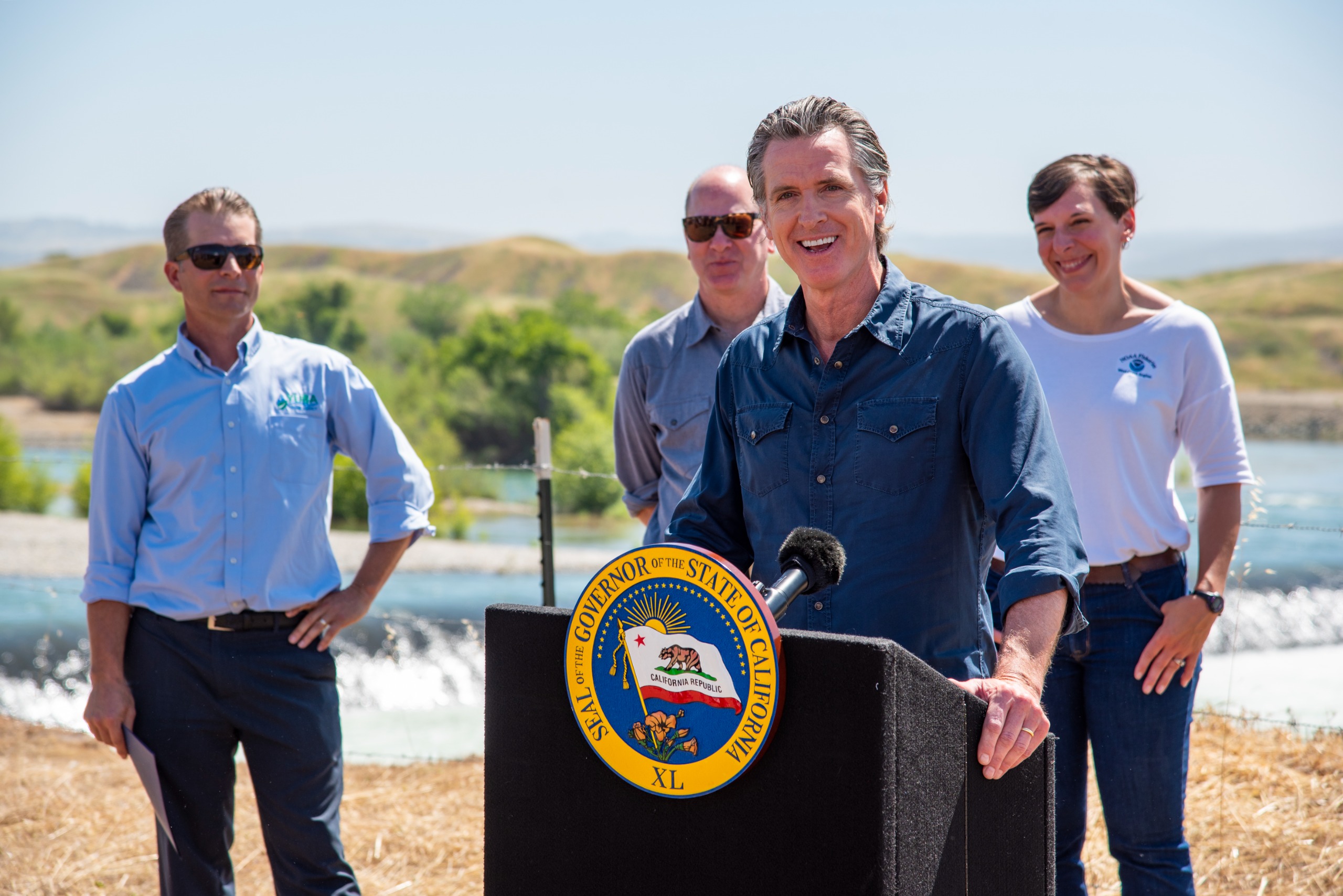
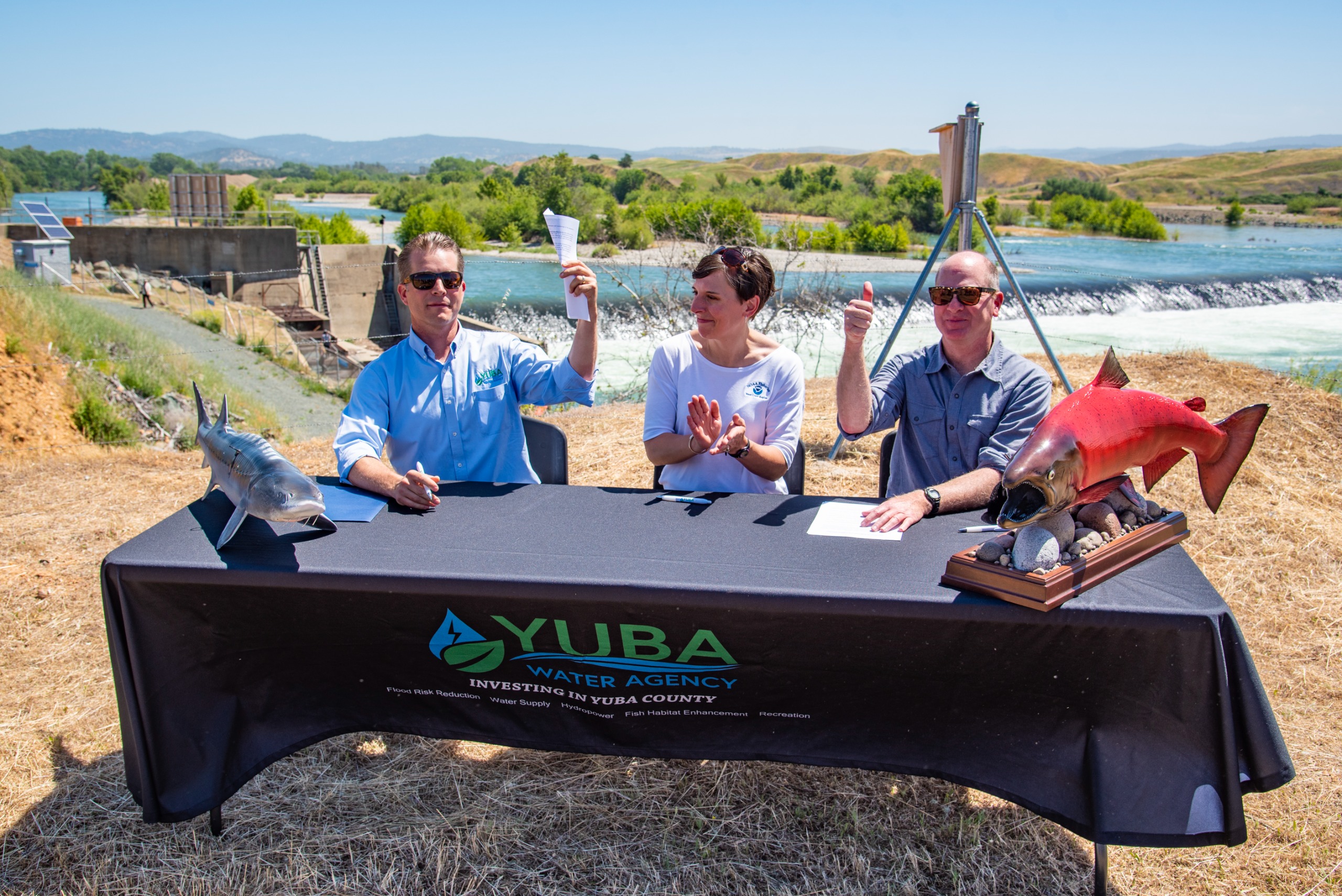
The project is part of a broader, long-term effort led by Yuba Water Agency in collaboration with the California Department of Fish and Wildlife and NOAA Fisheries to improve conditions for fish in the Yuba River while maintaining reliable water supplies for the region’s agricultural community.
Project Partners
Yuba Water developed the Nature-like Fishway in partnership with the California Department of Fish and Wildlife and NOAA Fisheries to support state and federal recovery goals for threatened and endangered fish species while maintaining water supply reliability in Yuba County. Kleinschmidt, Christensen and Associates and ENGEO led design of the project with environmental compliance support from Robertson-Bryan. Teichert is leading construction, with support from Syblon Reid and Verdantas.
Funding
The project is nearing its final design, which will determine the total project cost. Yuba Water has committed to building it, and the California Department of Fish and Wildlife has committed $30 million for the project.
Frequently Asked Questions
The Nature-like Fishway is a natural, river-like channel that will allow fish to swim around Daguerre Point Dam and to reach more than 10 miles of valuable, cool-water habitat that is currently difficult for some threatened species and inaccessible for others. The project was designed to support state and federally listed species, including spring-run Chinook salmon, Central Valley steelhead and green sturgeon, as well as other native fish like Pacific lamprey.
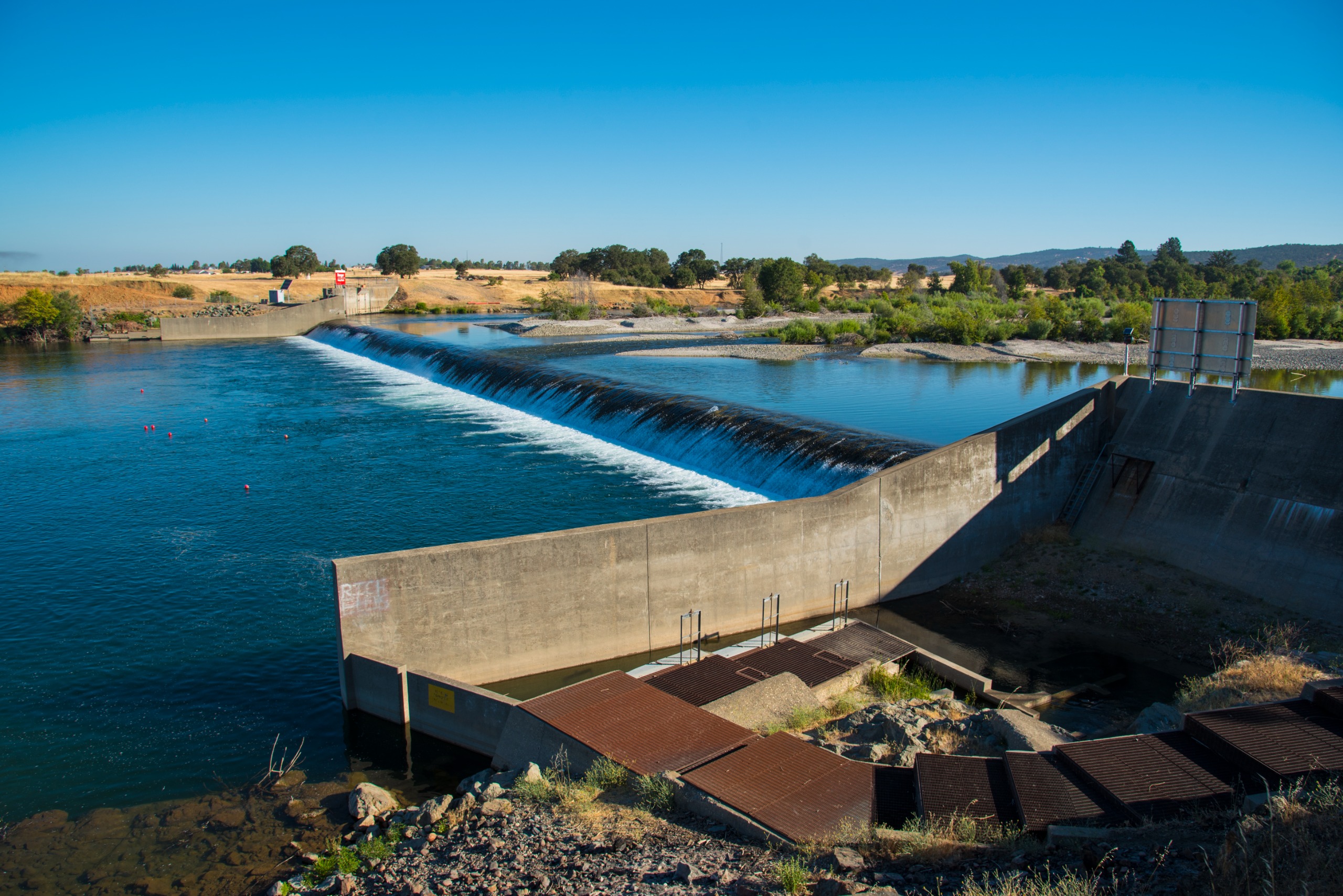
The lower Yuba River provides important cold-water habitat for Chinook salmon, Central Valley steelhead and green sturgeon. More than a century ago, sediment from Gold Rush-era hydraulic mining filled the river, and Daguerre Point Dam was built to contain that material. While the dam continues to serve that purpose, it also limits fish passage.
Existing fish ladders are outdated and do not function well for all species or across all flow conditions. Some species, such as the green sturgeon, are incapable of using fish ladders at all.
The Nature-like Fishway will restore access to more than 10 miles of high-quality habitat in one of the few Central Valley rivers that consistently maintains suitable cold-water conditions for salmon and steelhead. Expanding access to this habitat is a key step in supporting long-term recovery of threatened fish populations.
The existing ladders have significant limitations. They can delay migrating fish, become blocked by debris and do not work for non-jumping species such as green sturgeon and Pacific lamprey. The Nature-like Fishway provides a more natural and effective solution that works across a wide range of flows and supports multiple species and life stages moving both upstream and downstream during their natural migrations.
The fishway is designed to function like a natural river channel and includes:
- A series of riffles and pools to allow fish to rest as they move upstream
- A channel aligned with the river’s historic pathway around Daguerre Point Dam
- Flood-resilient embankments designed to withstand extreme flows
- A modernized water diversion and fish screen to protect fish while maintaining water deliveries
- Restoration of an existing intake area to a seasonal floodplain
The design allows fish passage across a wide range of flows and is intended to move sediment naturally, reducing long-term maintenance needs.
Construction is anticipated to begin in the fall of 2026. Construction timing, including estimated completion, will be determined during final design, which should be complete by summer of 2026.
There is no proven method to selectively block striped bass in an open, nature-like system without also blocking native fish. Adding barriers would conflict with the project’s goal of providing natural, volitional passage for all native species and life stages.
Available data suggest predation is one of many factors affecting native fish populations but is not the primary driver of declines. While striped bass can prey on juvenile salmon under certain conditions, studies specific to the lower Yuba River indicate limited overlap between striped bass presence and peak salmon outmigration. Cooler water temperatures upstream are also generally less favorable for striped bass.
While it is generally expected that some predation will occur, restoring access to high-quality habitat is expected to provide an overall benefit to native fish populations.
Peter B. Moyle, a leading California fish biologist and University of California distinguished professor emeritus has stated that even if some predation occurs as a result of the fishway, the benefits of improved access to spawning and rearing habitat for salmon and steelhead are expected to outweigh those effects.
Yes. Agencies will continue to monitor fish populations, habitat conditions and overall performance of the fishway to ensure it meets project goals and to inform future management decisions.
The California Department of Fish and Wildlife, one of our partners on this project, is responsible for all fish management decisions and actions in the Lower Yuba River. CDFW has directly engaged with the fishing community regarding concerns of impacts from native and non-native predators above Daguerre Point Dam and they are directly working on fish community monitoring protocols. Yuba Water is responsible for building the infrastructure to the design criteria to enable passage for the targeted fish species. Yuba Water will also be responsible for the operation and maintenance of the project to ensure it continues to function as designed.
The Nature-like Fishway is designed to be resilient to flooding and move sediment through it efficiently. Additionally, annual maintenance of the cross channel above Daguerre Point Dam, which is currently conducted by the U.S. Army Corps of Engineers, will be done by Yuba Water Agency once the project is built.
The Nature-like Fishway will not be for recreational use.
The Nature-like Fishway project, including the design, was informed by a wide range of scientific research, monitoring and fisheries studies in the Yuba River and across California. A list of consulted research is below.
- Alvarez, Justin S. and Ward, Darren M. (2019). Predation on wild and hatchery salmon by non‐native brown trout (Salmo trutta) in the Trinity River, California. 28(4). https://doi.org/10.1111/eff.12476
- Bartlett, Gina and Monaghan, Jodie. 2008. Lower Yuba River Issue Assessment Report. Center for Collaborative Policy. California State University, Sacramento. Prepared for South Yuba River Citizen’s League, Yuba County Community Development and Services Agency, Yuba County Water Agency. April 8, 2008.
- Beccio, M. 2018. Yuba River Green Sturgeon. pers. comm. J. Heublein. June 25, 2018.
- Brandl, S., B. Schreier, J. L. Conrad, B. May, and M. Baerwald. 2021. Enumerating predation on Chinook salmon, Delta Smelt, and other San Francisco estuary fishes using genetics. North American Journal of Fisheries Management, 41(4), 1053–1065. https://doi.org/10.1002/nafm.10582.
- California Department of Fish and Game 1991. Lower Yuba River Fisheries Management Plan. February 1991. Report No. 91-1.
- California Department of Fish and Wildlife (CDFW). 2009. California Salmonid Habitat Restoration Manual, Part XII Fish Passage Design and Implementation. CDFW, Sacramento, CA.
- California Department of Fish and Wildlife (CDFW). 2018. Yuba River O.Mykiss Telemetry Study. Unpublished data.
- California Department of Fish and Wildlife. Central Valley Angler Survey Database. Publicly available at: https://data.ca.gov/dataset/central-valley-angler-survey-database
- Cheek T. E., M. J. Avyle, and C. C. Coutant. 1985. Influences of Water Quality on Distribution of Striped bass in a Tennessee River Impoundment. Transactions of the American Fisheries Society, 114(1), 67-76. https://doi:10.1577/1548-8659(1985)1142.0.co;2.
- Coutant, C. 1985. Striped bass, temperature, and dissolved oxygen: a speculative hypothesis for environmental risk. Transactions of the American Fisheries Society, 114(1), 31-61.
- Davis, J. P., E. T. Schultz, J. C. Vokoun. 2012. Striped bass consumption of blueback herring during vernal riverine migrations: does relaxing harvest restrictions on a predator help conserve a prey species of concern? Marine and Coastal Fisheries: Dynamics, Management, and Ecosystem Science, 4:1, 239-251. DOI: 10.1080/19425120.2012.675972
- Endangered and Threatened Wildlife and Plants: Proposed Rulemaking To Designate Critical Habitat for the Threatened Southern Distinct Population Segment of North American Green Sturgeon. Pages 52083-52110 (28 pages) in National Marine Fisheries Service, editor. Office of the Federal Register, 73 FR 52095.
- Grossman, G.D., T. Essington, B. Johnson, J. Miller, N.E. Monsen, and T.N. Pearsons. 2013. Effects of Fish Predation on Salmonids in the Sacramento River-San Joaquin Delta and Associated Ecosystems.
- He, M. 2022. Assessing Changes in 21st Century Mean and Extreme Climate of the Sacramento–San Joaquin Delta in California. Climate 2022, 10, 16. https://doi.org/10.3390/cli10020016
- HDR. 2020. 2020 Update Lower Yuba River Vaki Riverwatcher Chinook Salmon Passage and Run Differentiation Analyses. Prepared by Brian Poxon and Paul Bratovich. 2365 Iron Point Rd, Suite 300. Folsom, CA. 95683. Prepared for Yuba Water Agency. 1220 F St., Marysville, CA. 95901.
- Hilborn, R., and C.J. Walters. 1992. Quantitative fisheries stock assessment: choice, dynamics, and uncertainty. Chapman and Hall, Springer, New York.
- Kim, J. H., J. D. Yoon, S. H. Baek, S. H. Park, J. W. Lee, J. A. Lee, and M. H. Jang. 2016. An Efficiency Analysis of a Nature-Like Fishway for Freshwater Fish Ascending a Large Korean River. Water, 8, 3. https://doi:10.3390/w8010003.
- Kowalik, D., D. Massa, and L. Stearman. 2019. Daguerre Point Dam Predation Survey Interim Draft Report. Lower Yuba River Accord Monitoring and Evaluation Plan prepared for the lower Yuba River Accord Planning Team.
- Kuriyama, P., T. Branch, A. Hicks, J. Harms, and O. Hamel. 2017. Investigating three sources of bias in hook-and-line surveys: survey design, gear saturation, and multispecies interactions.
- Lower Yuba River Management Team (RMT). 2013. Aquatic Resources of the Lower Yuba River, Past, Present, and Future. Draft Interim Report 351pp.
- McInturf, A. G., K. W. Zillig, K. Cook, J. Fukumoto, A. Jones, E. Patterson, D. E. Cocherell, C. J. Michel, D. Caillaud, and N. A. Fangue. 2022. In hot water? assessing the link between fundamental thermal physiology and predation of juvenile Chinook salmon. Ecosphere, 13(11). https://doi.org/10.1002/ecs2.4264.
- Michel, C. J., J. M. Smith, N. J. Demetras, D. D. Huff, and S. A. Hayes. 2018. Non-native fish predator density and molecular-based diet estimates suggest differing effects of predator species on juvenile salmon in the San Joaquin River, California. San Francisco Estuary and Watershed Science 16(4), Article 3. Available online: https://escholarship.org/uc/item/9cb0v4fz
- Moyle P. B., V. D. Mari, and J. Tomelleri. 2002. Inland fishes of California (revised and expanded ed.). Berkeley: University of California Press.
- National Marine Fisheries Service. 2014. Recovery Plan for the Evolutionarily Significant Units of Sacramento River Winter-run Chinook Salmon and Central Valley Spring-run Chinook Salmon and the Distinct Population Segment of California Central Valley Steelhead. California Central Valley Area Office. July 2014.
- National Marine Fisheries Service. 2017. Endangered Species Act Section 7(a)(2) Biological Opinion, Magnuson-Stevens Fishery Conservation and Management Act Essential Fish Habitat Response, and Fish and Wildlife Coordination Act Recommendations for the Hallwood Side Channel and Floodplain Restoration Project. NMFS No: WCR-2017-6273
- National Marine Fisheries Service. 2018. Recovery Plan for the Southern Distinct Population Segment of North American Green Sturgeon (Acipenser medirostris). Pages 95 in National Marine Fisheries Service, editor.
- National Marine Fisheries Service. 2022. Anadromous Salmonid Passage Facility Design, NMFS, Northwest Region, Portland, OR.
- Nobriga, M. L., and F. V. Feyrer. 2007. Shallow-water piscivore-prey dynamics in California’s Sacramento-San Joaquin Delta. San Francisco Estuary and Watershed Science, 5(2). https://doi.org/10.15447/sfews.2007v5iss2art4.
- Nobriga, M. L., C. J. Michel, R. C. Johnson, and J. D. Wikert. 2021. Coldwater fish in a warm water world: Implications for predation of salmon smolts during estuary transit. Ecology and Evolution 2021(11):10381-10395.
- Patterson, N. K., B. A. Lane, S. Sandoval-Solis, G. B. Pasternack, S. M. Yarnell, and Y. Qiu. 2020. A hydrologic feature detection algorithm to quantify seasonal components of flow regimes. Journal of Hydrology 585(2020) 124787.
- Quinn, T.J. and Deriso, R.B. 1999. Quantitative fish dynamics. Oxford University Press, New York.
- Sabal, M., S. Hayes, J. Merz, and J. Setka. 2016. Habitat alterations and a nonnative predator, the striped bass, increase native chinook salmon mortality in the Central Valley, California. North American Journal of Fisheries Management, 36(2), 309–320. https://doi.org/10.1080/02755947.2015.1121938.
- Sabal, M.C., C.J. Michel, J.M. Smith, A. Hampton, and S. A. Hayes2018. Seasonal Movement Patterns of Striped bass (Morone saxatilis) in Their Nonnative Range. Estuaries and Coasts, 42:567–579. DOI: 10.1007/s12237-018-0467-7.
- Stompe, D., J. Roberts, C. Estrada, D. Keller, N. Balfour, and A. Banet. 2020. Sacramento River Predator Diet Analysis: A comparative study. San Francisco Estuary and Watershed Science, 18(1). https://doi.org/10.15447/sfews.2020v18iss1art4.
- Tamario, C., E. Degerman, S. Donadi, D. Spjut, and L. Sandin. 2018. Nature-like fishways as compensatory lotic habitats. River Research and Applications, 34(3), 253–261. https://doi.org/10.1002/rra.3246.
- Three Rivers Levee Improvement Authority 2023. Goldfields Multi-Benefit Project Feasibility Study. December 2023.
- Turner, J. L., & Kelley, D. W. 1966. Ecological studies of the Sacramento–San Joaquin Delta, Part II: Fishes of the Delta. California Department of Fish and Game, Fish Bulletin 136, 168 pp.
- Ward, H.G.M., Askey, P.J., and J.R. Post. (2013) A mechanistic understanding of hyperstability in catch per unit effort and density–dependent catchability in a multistock recreational fishery. Canadian Journal of Fisheries and Aquatic Sciences 70:1542–1550.
- Yoshiyama, Ronald M., et al. 1996. "Historical and present distribution of Chinook salmon in the Central Valley drainage of California." Fish Bulletin 179.1 (2001): 71-176.
- Yuba County Water Agency. 2010. Yuba River Development Project. November 2010.